Skip to content

Captain Marvel Reading Order: From Mar-Vell to Carol Danvers
  • by

There are several characters known as Captain Marvel. We are not here to talk about Shazam, but we have to start the story with him. As you may know, Fawcett’s Captain Marvel was enormously popular in the 1940s, outselling even Superman, becoming one of the most successful superheroes of the Golden Age of Comics. His popularity, however, brought legal trouble. In 1941, DC Comics filed a lawsuit against Fawcett Publications, claiming that Captain Marvel was an infringement on Superman. The case dragged on for over a decade, with multiple appeals and shifting rulings.

Ultimately, in 1953, Fawcett agreed to cease publication of its superhero comics, citing declining sales and the high cost of litigation. Captain Marvel disappeared from newsstands for nearly twenty years. DC Comics would later license and eventually purchase the character from Fawcett, reintroducing him in the early 1970s under the title “Shazam!” since by that time, Marvel Comics had legally claimed the trademark “Captain Marvel.”

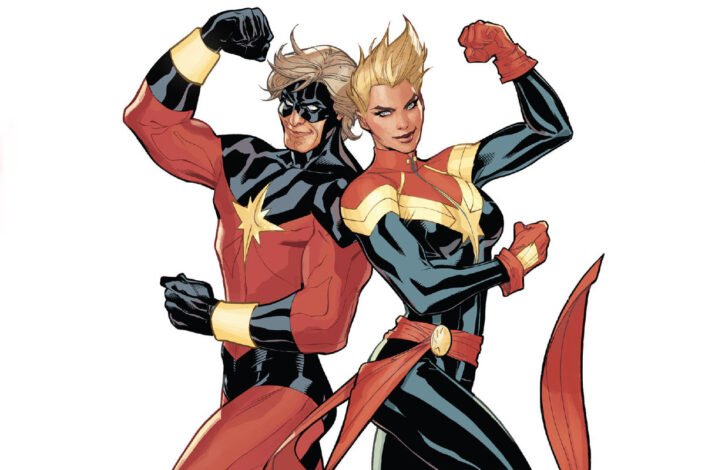
Marvel’s claim to the name began in 1967, when writer-editor Stan Lee and artist Gene Colan introduced their own Captain Marvel in Marvel Super-Heroes #12. This version, a Kree military officer named Mar-Vell, was created largely to secure the trademark and prevent others from using it. To maintain ownership, Marvel was required to publish a comic featuring the name “Captain Marvel” periodically. As a result, readers have seen a long succession of characters (Mar-Vell, Monica Rambeau, Genis-Vell, Phyla-Vell, Noh-Varr, and Carol Danvers) take up the mantle in various ongoing series, limited runs, team books, and one-shots from the late 1960s to the present day.

Read More »Captain Marvel Reading Order: From Mar-Vell to Carol Danvers
Dawn of DC, The Complete Reading Order

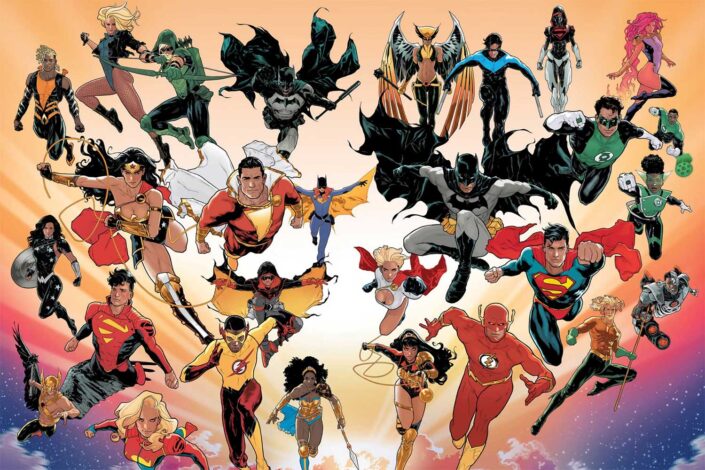
Building the future, “one hero at a time.” It was DC’s new statement for a new era, Following the restoration of the pre-Crisis infinite Multiverse and the disbandment of the Justice League at the end of the Dark Crisis, and the devastation of the DC Universe by the dispersion of Lazarus Resin across the globe.

While on paper, it sounded like a new start, Dawn of DC was more of a continuation of the Infinite Frontier period. Writers once again continued their runs, such as Chip Zdarsky’s Batman, Tini Howard’s Catwoman, Tom Taylor’s Nightwing, and Phillip Kennedy Johnson’s Action Comics. For new readers who wanted to jump into the DC Universe, this was not ideal, although there was new releases throughout the years to help, from a new Superman by Joshua Williamson to the launch of a new Titans title by Tom Taylor, as they became the world’s premier superhero team for a short time.

This initiative was full of events, including the return of the Justice Society, a summer of nightmares during Knight Terrors, a conflict between Batman and Catwoman in Gotham War, a global threat in Titans: Beast World, and Superman facing the House of Brainiac. During all this time, the superhero community was threatened by the ambitious Amanda Waller, who was working her way towards more power in order to enact a crazy plan and redefine the DC Universe, culminating in Absolute Power!

Read More »Dawn of DC, The Complete Reading Order

35 Books To Read About Comic Books

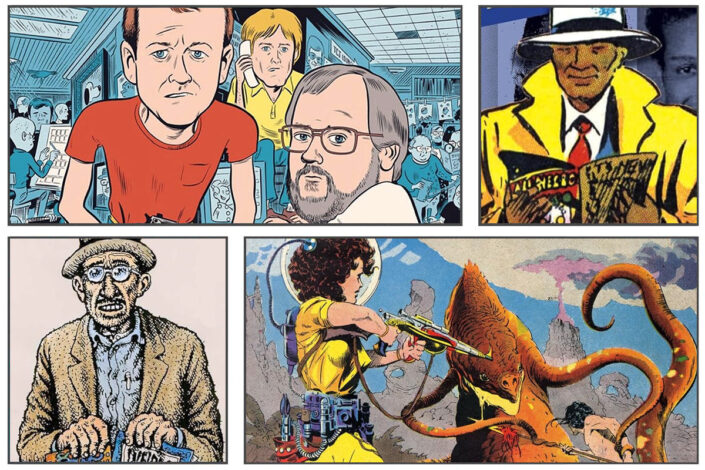
Every comic book reader has met someone who told them that it would be better if they read “real” books. Sadly, sequential art is often not considered to be as worthy an art form as literature. Nevertheless, if there are books that comic book readers like to read, it’s books about comic books! 

Some of those books are straightforward history books, while others are biographical in nature, but all explore, in one way or another, some aspect of the multifaceted development of the industry that has become such a pillar of American culture. From the creation of icons to the exploitative nature of the publishing world, the emergence of artistic movements, and the economic evolution of the industry, there are a lot of subjects to cover. 

Today, we are aiming to compile a selective list of books that you might be interested in reading about comic books. There are fewer than one might expect after so many decades. Nevertheless, more and more insiders and fans are trying to chronicle the history of comics before too many of those who lived it leave us. In the following selection, you’ll find biographies, history books, art books, essays, interviews, and memoirs, going into different genres, authors, and topics. 

Read More »35 Books To Read About Comic Books

Lumberjanes Reading Order (Boom! comics)

  • by

Friendship to the Max! Published by Boom! Studios under its Boom! Box imprint, Lumberjanes is a comic book series created by Shannon Watters, Grace Ellis, Noelle Stevenson, and Brooklyn A. Allen. Launched in April 2014, it was initially conceived as an eight-issue limited run, but its popularity led to an extended publication, ultimately concluding with issue #75 in 2020.

Set at Miss Qiunzella Thiskwin Penniquiqul Thistle Crumpet’s Camp for Hardcore Lady Types, the series follows five friends (Jo, April, Mal, Molly, and Ripley) who attend a summer camp where the ordinary rules of nature and reality rarely apply. Strange phenomena abound: three-eyed foxes roam the forest, mysterious caves hide ancient secrets, and cryptic messages appear in the form of anagrams. Despite the chaos, the campers face every challenge with courage, wit, and unwavering friendship, embodying the series’ recurring motto: “Friendship to the max!”

Paying homage to classic “Girl Scout” and camp adventure tropes, Lumberjanes blends adventure, fantasy, and humor with strong themes of teamwork, empowerment, and inclusivity through its mix of magical realism and heartfelt friendship. Critically acclaimed, the series has been the recipient of multiple awards, including two Eisner Awards (Best New Series and Best Publication for Teens in 2015) and a GLAAD Media Award for Outstanding Comic Book in 2016.

The success of the Lumberjanes comics led to various spin-offs and adaptations, including Lumberjanes: Gotham Academy (a crossover with DC Comics), a series of middle-grade novels co-written by Mariko Tamaki, and an animated television adaptation in development at HBO Max (later canceled during restructuring).

Read More »Lumberjanes Reading Order (Boom! comics)

West Coast Avengers Reading Order, Golden Coast’s Mightiest Heroes

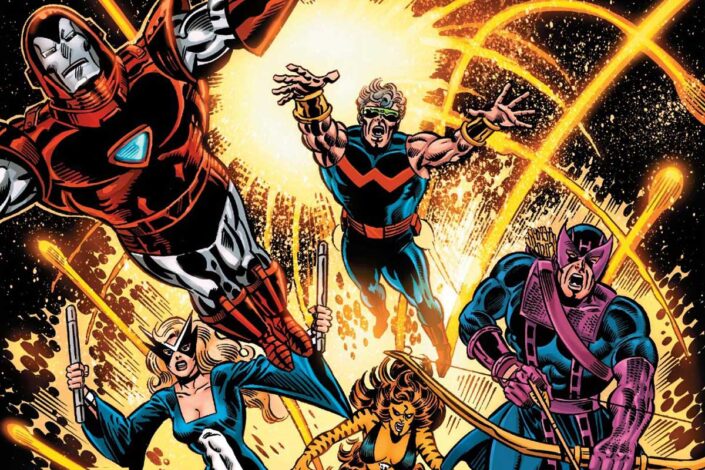
Since its launch in 1963, The Avengers have expanded into a comic franchise. The title spawned many spin-offs, such as The New Avengers, Mighty Avengers, Avengers Academy, Dark Avengers, Great Lakes Avengers, Secret Avengers, Young Avengers, and more! 

None of this would have been possible without the success of the first Avengers spin-off: West Coast Avengers. Following the success of the four-issue miniseries created by Roger Stern and Bob Hall released in 1984, the team really settled on the western side for around 10 years.

While the idea of having another Avengers branch to protect the other coast in a world where space and time travel exist can seem a little bit ridiculous, things were different in the eighties. More than moving on the other side of the country, the West Coast Avengers simply expanded the Avengers Universe, opening the doors for more types of adventures.

Read More »West Coast Avengers Reading Order, Golden Coast’s Mightiest Heroes

Superman Omnibus Reading Order!

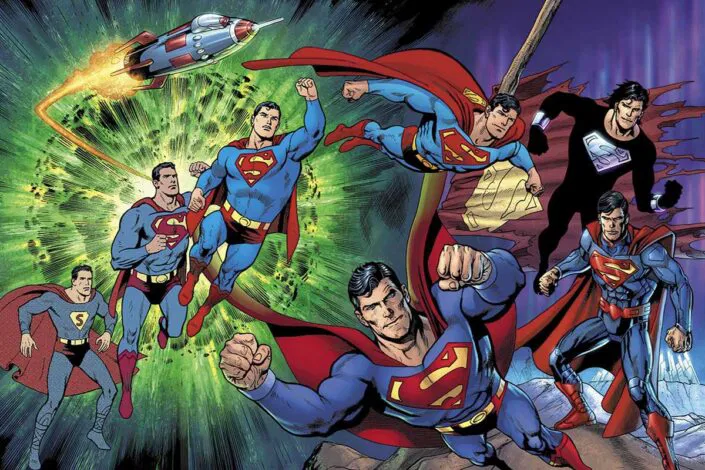
He’s the champion of the oppressed, the physical Marvel who had sworn to devote his existence to helping those in need, and the star of many comic books since his first appearance in 1938! Since his introduction in Action Comics #1, Superman has used his powers and intelligence to help humanity.

His world has naturally expanded to include more solo adventures, team-ups, new allies and villains, and iconic stories. His adventures have been chronicled in more than one comic book title. Over the years, DC Comics has collected many of these tales, story arcs, crossovers and runs in various formats, including the famous Omnibus line.

However, despite being one of DC Comics’ most important superheroes, Superman’s omnibus collection pales in comparison to Batman’s! Fortunately, things are turning around for the Kryptonian, as the publisher has released several Superman volumes in recent years, and the success of these publications should encourage more omnibus editions! With the world of Superman expanding significantly within the Omnibus line, we take a closer look at this collection, which offers both new and seasoned readers a great way to discover Big Blue’s history.

Read More »Superman Omnibus Reading Order!

Ultimate Marvel Universe, The Complete Reading order

In 2000, Marvel Comics redefined its heroes for a whole new generation with the launch of the Ultimate Marvel imprint. Explore the stories of Ultimate Spider-Man, Miles Morales, Ultimatum, and the imprint’s relaunch with our complete Ultimate Marvel Universe comics guide, now available in Omnibus, Epic Collection, and classic trade paperbacks!

Welcome to Earth-1610! Or, more specifically, welcome to the Ultimate Universe, an alternate reality featuring reimagined and modernized versions of your favorite superheroes. Marvelophiles discovered this world in 2000 with the official launch of the Ultimate imprint.

Behind the Ultimate Marvel was Bill Jemas, a lawyer who had worked mainly in the collectible-trading-card industry. He was first appointed executive vice president of Marvel Entertainment Group in 1993, and put in charge of Marvel’s editorial direction in 2000. He replaced editor-in-chief Bob Harras with Joe Quesada, and with him, formed the public face of Marvel Comics. Together, they transformed Marvel Comics with the addition of the Marvel MAX line, the development of Marvel Knights, the increase of trade paperbacks, the removal of the Comics Code, and, of course, the creation of Ultimate Marvel.

Read More »Ultimate Marvel Universe, The Complete Reading order

Knull Reading Order, The King in Black

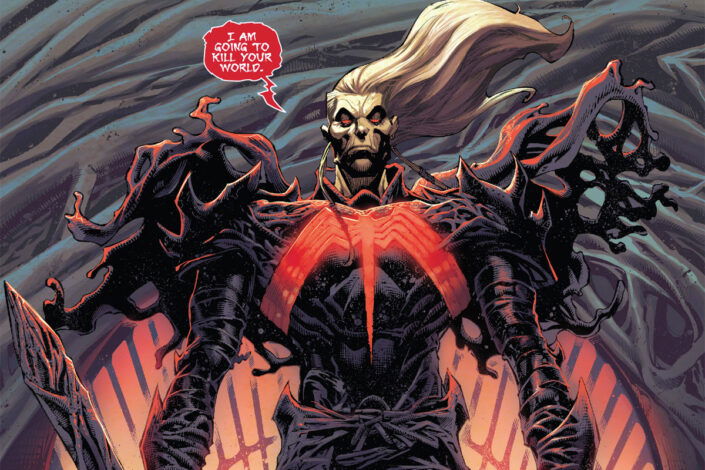
In recent years, the most significant new villain to emerge in the Marvel Comics Universe is Knull, the King in Black. Created by writer Donny Cates and artist Ryan Stegman, he first appeared in Venom #3 (2018) and slowly grew to become one of the biggest cosmic menaces the superheroes had to face.

Knull is introduced as the god of the symbiotes and one of the primordial beings of the Marvel Universe. As his story unfolds, we learn that he existed before the current Marvel Universe, in the endless void that preceded creation. When the Celestials began shaping the universe, their light angered him, leading him to forge the first symbiote (the All-Black Necrosword) and wage war against them. After decapitating a Celestial, Knull used its head to forge more weapons and eventually created the symbiote species, which he bound into a hive mind under his control.

An embodiment of darkness and nihilism, Knull has powers that make him able to manipulate darkness and, obviously, maintain control over the symbiote, but he is also “immortal” and possesses godlike strength.

While Knull was at the center of the King in Black crossover event, he appeared before that, becoming a real menace to Eddie Brock and the rest of the Marvel Universe. He and his All-Black Necrosword.

Read More »Knull Reading Order, The King in Black

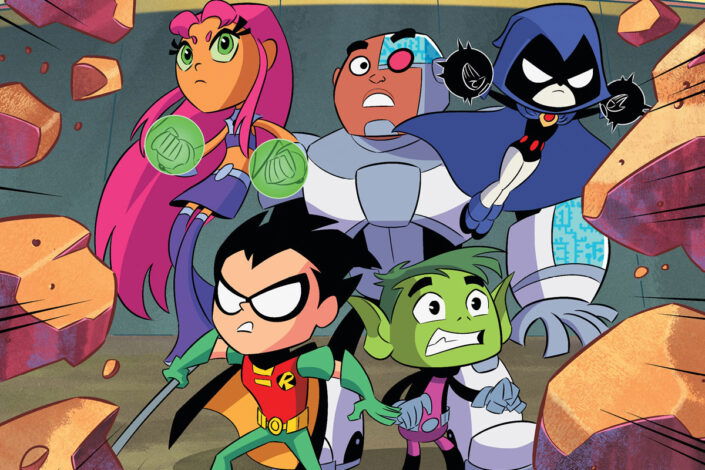
Teen Titans Go! Comics Reading Order

The first time Teen Titans Go! was used as a title on a DC Comics property was with the comic book spin-off of the 2003 Cartoon Network Teen Titans animated series created by Glen Murakami. The show went on for 5 seasons, officially ending in 2006 with a movie. 

A very popular show in its time, Teen Titans eventually spun off another animated TV show on Cartoon Network, this one titled Teen Titans Go!, and was developed by Aaron Horvath and Michael Jelenic. Still ongoing, it was launched in 2013 following the popularity of DC Nation’s New Teen Titans shorts. The series is only loosely connected to the original show, featuring occasional references and cameos but adopting a far more comedic and parodic tone.

Primarily aimed at a younger audience, Teen Titans Go! quickly became a cultural phenomenon, noted for its self-aware humour, fast-paced gags, and frequent pop culture references. Like its predecessor, this new series has also received its own comic book spin-off, expanding the franchise into print while maintaining the humour-driven style and broad appeal of the show.

Read More »Teen Titans Go! Comics Reading Order

Black Hammer Reading Order by Jeff Lemire and Dean Ormston

  • by

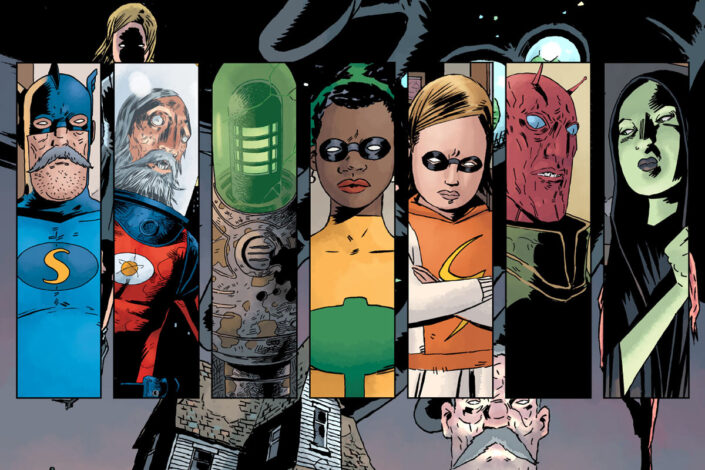
Black Hammer is an American comic book series created by writer Jeff Lemire and artist Dean Ormston, published by Dark Horse Comics. It tells a different kind of superhero story, mixing mythology with elements of mystery and rural drama in a way that explores the psychological and emotional consequences of heroism. A very Twilight Zone take on the genre.

The story begins a decade after an epic battle in which the legendary hero Black Hammer and the other costumed champions of Spiral City, known as the Parazone Defenders, defeated the cosmic entity Anti-God. Despite their victory, the heroes vanished in the aftermath of the fight. To the outside world, they were presumed dead.

In reality, the group became inexplicably trapped in the small, timeless town of Rockwood, a rural community isolated from the rest of existence. Any attempt to leave is met with failure. As a matter of fact, Black Hammer himself died trying. Without a way to escape their confinement, Abraham Slam, Golden Gail, Colonel Weird, Madame Dragonfly, and Barbalien adopt new identities and attempt to lead ordinary lives, struggling with their fading memories, growing despair, and uncertainty about the nature of their imprisonment.

Launched in 2016, the original critically acclaimed Black Hammer comic book series has since expanded into a shared universe through numerous spin-offs and companion series, collectively known as The Hammerverse.

Read More »Black Hammer Reading Order by Jeff Lemire and Dean Ormston